
A Giving Drive Can Be the Start of Something Bigger
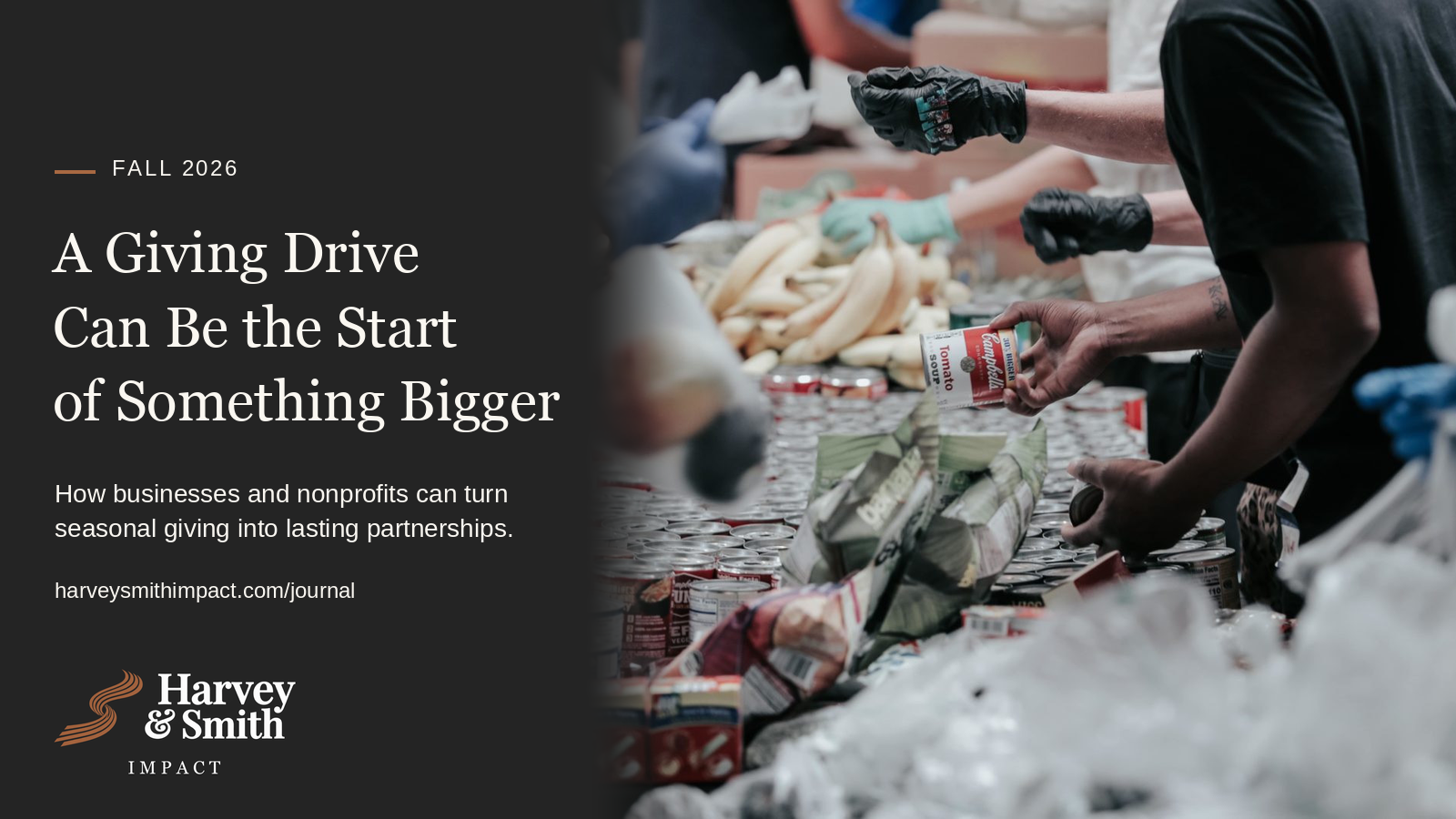
Imagine a Capital Region business organizing a holiday food drive with a pantry. Employees contribute, customers join in, and the collection meets a need the pantry has identified.
In a conversation afterward, another need comes up. Getting food from a supplier to the pantry carries a recurring transportation cost. The business agrees to cover one scheduled delivery a month for six months, up to a set amount. The pantry chooses the provider and schedule. Employees who want to stay involved organize occasional collections around the pantry’s current requests.
The pantry now has support it can plan around for an expense it would otherwise have to cover. The business knows the cost and duration of its commitment. Employees have a defined way to participate. Together, they have turned a seasonal introduction into six months of practical help.
Especially at this time of year, it is easy to get caught up in helping. There is energy behind a collection and satisfaction in watching people respond. A conversation with the nonprofit can reveal where that energy could solve a recurring problem, with benefits that are clear to everyone involved.
Making the contribution go further
A nonprofit may have access to donated goods and still need the means to collect, store or distribute them. Funding that capacity can make resources already available to the organization more useful.
There is a substantial local example. In 2025, the Regional Food Bank reported that support through the Innovation Partnership with Albany County and MVP Health Care helped fund a dedicated staff member focused on senior hunger and a grocery-store pickup route in partnership with Tech Valley Shuttle. These investments supported the people and transportation needed to get food where it was needed.
The useful principle applies at different scales. In our pantry example, covering a delivery expense gives the organization something specific to include in its plans. It also gives the business a clear account of what its contribution pays for.
Professional help can have a similarly concrete value when the nonprofit identifies the work. A printer that agrees to produce an upcoming fundraising mailing removes a defined production cost from that campaign. The nonprofit gains a service it intended to use, and the business can plan the materials and time involved.
The nonprofit also needs room to decline help whose coordination would cost more than it saves. That judgment belongs in the conversation from the beginning.
A clearer giving plan for the business
Business owners receive requests from many worthwhile organizations. A defined partnership gives them a basis for deciding where to commit money and staff time.
An agreed budget and end date help keep the obligation manageable. A chosen area of support helps the owner evaluate future requests against an existing plan. There is also a clearer answer when the business needs to explain that its giving budget is already committed.
Employee participation becomes easier to organize around that plan. A small team can take responsibility for the agreed collections, with work time and responsibilities established in advance. The nonprofit has a consistent contact. The owner has fewer details to manage personally. Employees who choose to take part know what they are responsible for and what their work supports.
There is a practical communications benefit, too. A business can describe the contribution accurately: a delivery funded, a requested collection completed or a fundraising mailing produced. Those are specific actions employees and customers can understand. A nonprofit can help explain why they matter, giving the business something substantive to share beyond a photograph of the collection.
Opening a door to new supporters
A business also has an audience a nonprofit may struggle to reach on its own.
Featuring an agreed appeal in a customer newsletter can introduce the organization to potential donors without requiring it to buy that exposure. A link to the nonprofit’s own signup page lets interested readers choose whether to stay connected. The nonprofit gains an opportunity to build its audience, while the business keeps customer information private.
The invitation could be as specific as the partnership itself: help fund another delivery, contribute an item the pantry has requested or sign up to hear about future needs. People have a clear way to act, and the nonprofit has an opportunity to continue the relationship directly with those who opt in.
That opportunity has value even when no future gift is guaranteed. The arrangement should leave the nonprofit in control of its message and respect the privacy of the people it serves.
Giving the relationship a useful next step
Continuing a partnership works best when both sides can name what it makes possible. In the pantry example, the six-month agreement creates a natural point to review whether the deliveries were useful and whether the commitment remains affordable.
The nonprofit can suggest a different priority. The business can renew, adjust or finish the arrangement with clarity. Dependable support includes being honest about where a commitment ends.
A holiday drive gives people a reason to come together. From there, a well-designed partnership can cover a recurring cost, put professional skills to work or introduce a nonprofit to new supporters. For a business, it can bring greater purpose and structure to giving it already wants to do.
Those are tangible reasons to keep the conversation going after the collection box is packed away.
Photo: Joel Muniz